
Trauma therapy
Survival isn’t cutting it anymore. It’s time to wake up, come home and live fully, honestly, and in your own truth.

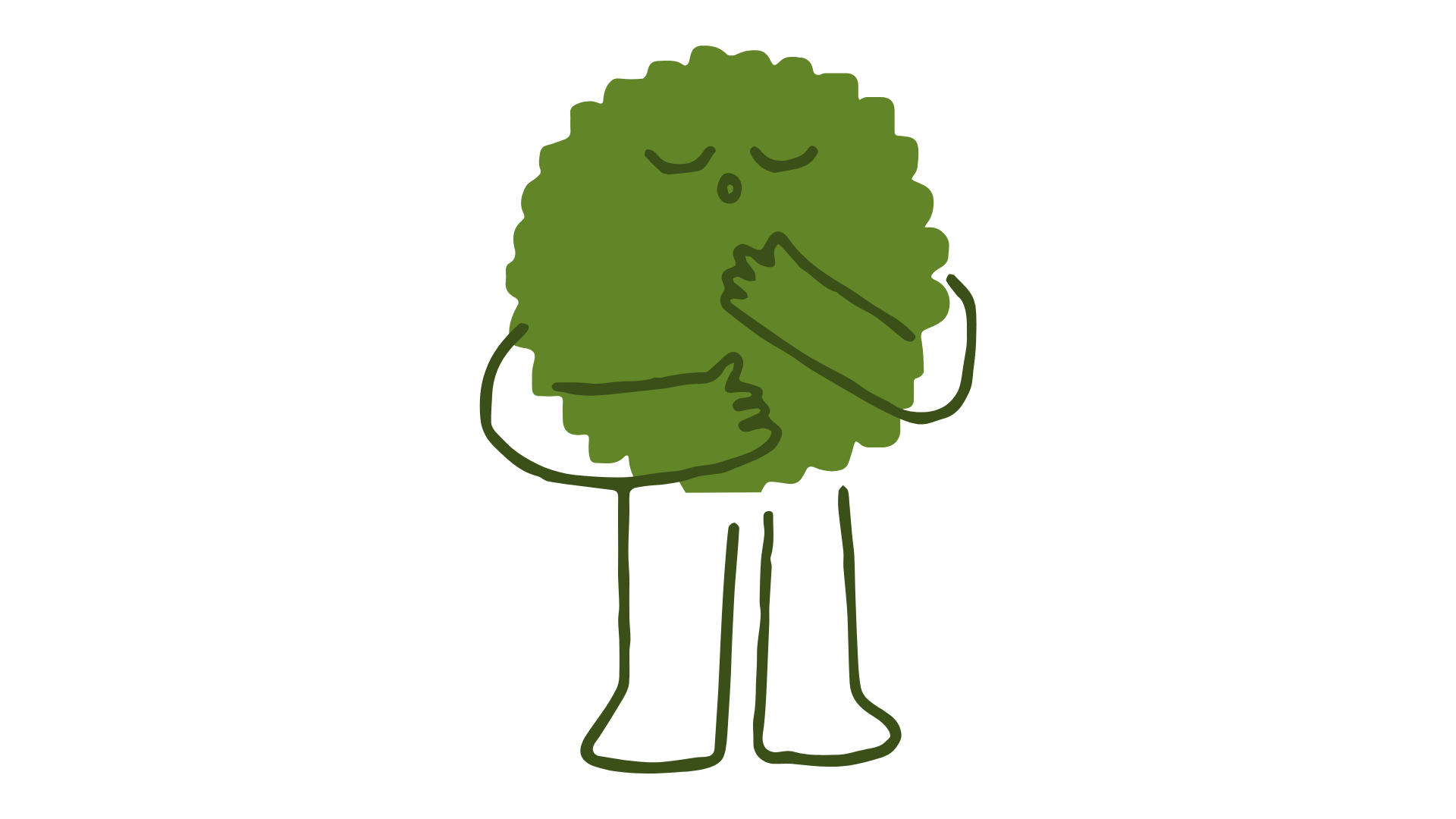
Trauma therapy is a fierce and brave process of reclamation - a return to who you are, who you’ve always been underneath all the ways you learned to adapt and survive. You know what I mean - the way you swallow your truth, bite your tongue to keep the peace, hide, shrink, and shape-shift. Let’s celebrate these strategies for a job well done and then curiously lean in - not because you love to suffer, but because you are desperate to reclaim yourself. If you’ve spent years holding the emotional weight of everyone around you, pushing through exhaustion, or wondering why you still feel disconnected even though you’re “doing the work”… hear this:
You are not broken. Not even close.
Everything you’re feeling makes perfect sense given what your body, heart, and nervous system have lived through. You did exactly what you needed to back then. The problem is . . . your system is still living in the “back then.”
Trauma therapy isn't about digging up every painful memory or white-knuckling your way through the hard stuff alone. It's about creating a space where your nervous system can take a real breath, where those protective walls that once saved you can soften, not because you force them to, but because they don’t have to work so hard anymore. In this space, you can begin trusting yourself again. I offer in-person and online sessions in Layton, UT for people ready to explore what healing looks like when it's rooted in presence, the body, and real human connection.
The weight you’ve been carrying
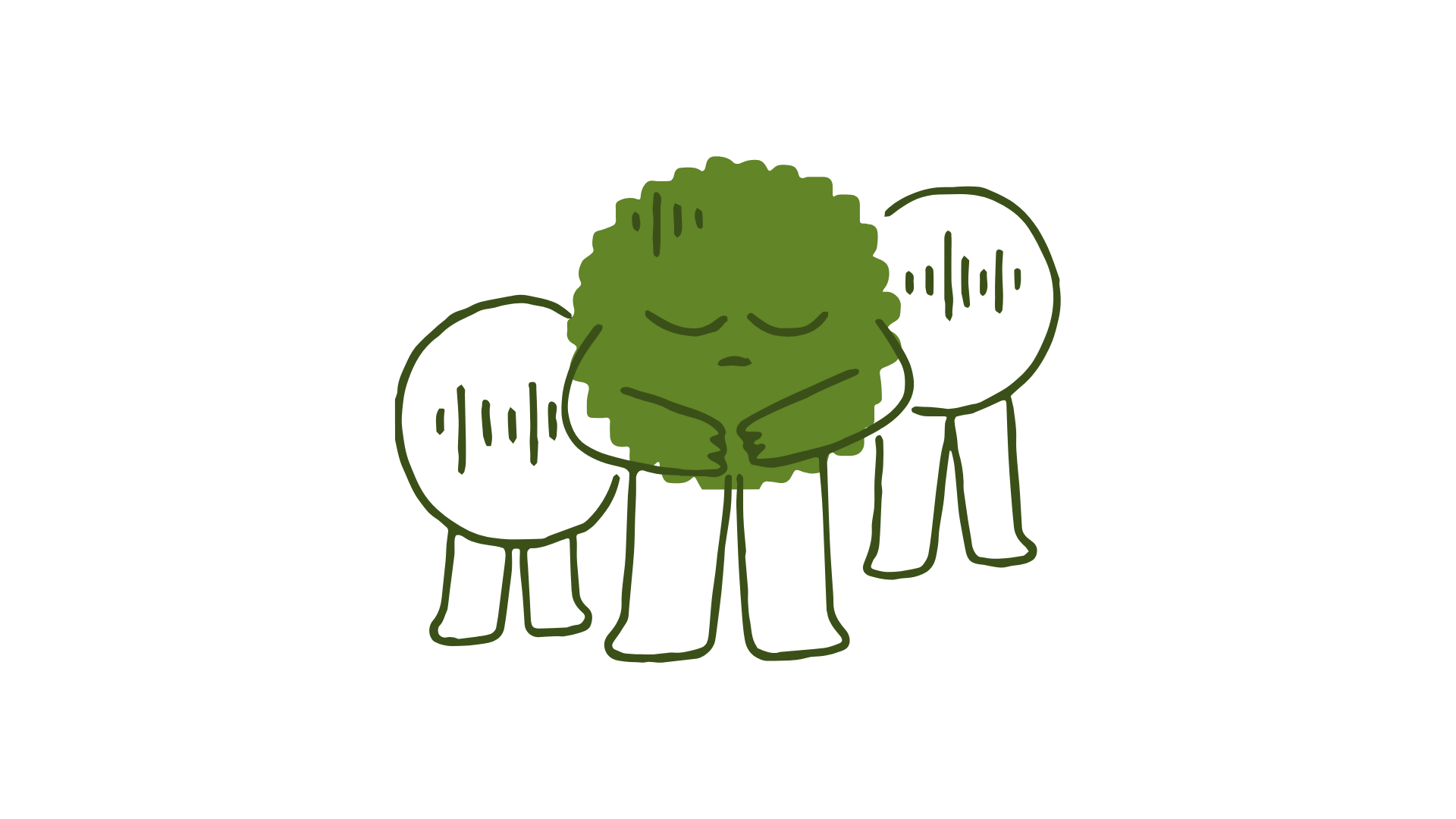
If you’re here, I’m guessing you’ve become incredibly skilled at sensing and attending to everyone else — their moods, their needs, the slightest shifts in the room. You’ve learned to shape shift, people please, accommodate, stay small, smile while you're seething inside… even though it is costing you your truth while abandoning yourself in the process.
You take on way too much responsibility for everything: other people’s feelings, the emotional tone of every interaction, the stability of every relationship. And then you feel drained, resentful, and exhausted . . . Immediately followed by a flood of guilt for feeling that way. Which spirals into working harder to fix yourself, do better, communicate clearer, take on more. . . only to burn out, lash out, and shut down . . . where in the guilt and shame storm in, reminding you of all the ways you’ve failed. . . you get the picture.
Here’s the truth you’re rarely told:
Those survival strategies were brilliant. They were necessary. They protected you. They helped you navigate environments that couldn’t hold you, see you clearly, or fully meet your needs. But what once kept you safe now feels like a cage. The hypervigilance, the self-abandoning, the swallowing of your truth — it’s taken a toll. Your body is exhausted. Your spirit is tired. You feel the deep ache of loneliness and invisibility even in rooms full of people.
And if you grew up with complex relationship dynamics - enmeshment, parentification, being put in the middle, or forced into roles no child should ever play, the layers run deep. If we add the death of a parent to the mix, your grief may be a tangled ball of relief and guilt, love and anger, clarity and confusion all at once. Plus, family patterns that kept you in survival mode and on edge before your parent died are now on full display with your surviving parent. It’s tearing you apart: you feel forced to choose between saving yourself or losing the last remaining parental connection. Talk about bearing the weight.
I get it. This is trauma’s terrain.
Why all the “usual” approaches haven’t quite worked
You're no stranger to trying. Self-help books? Read them. Journaling? Done it. Communication techniques? Not only have you learned them all. . . you crush them! Working hard is kind of your superpower, right?
But here's the tender, honest truth: you can't think your way out of trauma. You can't outwork it, out-learn it, or out-hustle it.
Trauma lives in your body, is held in your nervous system, in those automatic responses that kick in before your brain even catches up. It communicates via reflexes.
The tightening of your throat, the collapse in your chest, the shut down you can’t control. In the moments where your system is sending out SOS alerts via the super loud megaphone of sensations and dysregulated emotions - no amount of mindset work, talking, and understanding stands a chance.
Talk therapy alone, while valuable and has its place in the process, often can't reach the deeper places where the real pain - and the real healing - lives.
A different way through
My work begins with a core truth: you are inherently whole - your system is always moving towards health. Whatever symptoms, reactions, coping strategies, or “stuck” patterns are showing up in your life? They make sense. They have history. They have intelligence. They have really good reasons for being there. Our work is built around the truth that you have never been broken - you have only adapted.
This isn’t a quick fix therapy. It is not simply coping strategies and symptom management. There will be no “10 quick steps to heal your trauma and get on with your life.” There are no magic wands (although if I had one that worked, I would totally use it!)
So we're not going to spend our time trying to fix what's "wrong" with you. Instead, we slow down and get genuinely curious. We listen to what those patterns are protecting, and what they need in order to finally rest.
Because trauma lives in the body, we work with the body. More specifically - we work with your body. You are the expert of you, your system is uniquely and beautifully crafted into your own you-shaped-flavor. Which means we are going to teach you its language so you can listen, understand and speak it fluently. This puts you back in the driver’s seat of your life, making it possible to live with joy, ease, and the ability to be with all the ways life is going to keep life-ing. The goal isn’t about figuring out how to stop our trauma responses from happening - it is about building our capacity, flexibility, and tolerance to respond and engage, reorienting ourselves towards safety, presence, magic and life more easily and fluidly.
Through somatic therapy, dance/movement therapy, authentic movement, therapeutic writing, relational attunement, and the moment to moment wisdom of what emerges between us - we'll create space for the kind of expression and discovery that goes way beyond words. We are going to use all this to hear the parts of you that have gone unheard: the people pleaser who keeps the peace; the child who learned to shrink, the adult who longs to take up space, the body that remembers everything.
I trust your pain, the inner darkness, to show us where we need to go. This is not to overwhelm you, but to introduce you to the map back home. I know it sounds counterintuitive. Our brains, bodies and culture do everything possible to avoid pain. But the truth is - pain isn’t the problem. Pain that is ignored, denied or pushed aside? That stuff festers. I'm skilled at moving tenderly, slowly, and courageously toward those hurt places, allowing them to finally be seen, known, and understood. Gently, slowly, and precisely we will walk towards the parts of you waiting to be met and welcomed back.





How can trauma therapy help you
Here is what people often say during and after our work together:
“I thought I was going to have to go through every bad thing that happened to me. But I didn’t - your real responses to my story helped me trust myself. Things in my life are shifting without me having to relive all the trauma. . . what a relief.”
“Your authentic reactions to my stories helped me to see and feel the truth. In the past, there was just neglect - no protection. Your ability to name your own anger and desire to protect helped me to feel it for myself. And now, I am more able to set boundaries, say no, and offer that protection to myself.”
“I feel more myself day by day. I came in, spilled all the pieces, and you held them with me, so we could make sense of them together. It’s like I can see everything more clearly.”
“I love that you didn’t just try to fix me and fix the symptoms. Instead, together we were able to find the roots . . . with your courage and support I am now able to look inside and wonder rather than simply react and defend.”
“I can say what’s true without spiraling in a puddle of despair or panic.”
“My body feels like mine again. Like I’m living inside, rather than going through the motions.”
“I stop blaming myself for everything. And when I inevitably backslide, I’m able to get out quicker with more kindness.”
“I set boundaries without drowning in guilt. Who am I!?!?! I don’t know but I am LOVING this new version of me.”
“I feel alive — less numb or reactive. If these feelings reappear, I know how to meet them.”
“My relationships shifted — some ended, some deepened — and even though it has been SO hard, I feel like I am saving my own life. And it is a life worth saving.”
This is the work.
This is the shift out of survival and into full on living.

What it’s like to work with me
When we work together, you will not be sitting alone in the hot seat, scrambling to figure out what’s wrong with you. I’m engaged. Interactive. Human. And deeply attuned. I’m right there with you, using what’s happening between us — in the present moment — to spark awareness and invite experiences that gently challenge old patterns. This is relational repair in real time.
I've walked through my own fire, drowned and flailed in my own puddles of collapse and overwhelm. I do my own work deeply and continuously. That means I have a deep, wide capacity to welcome all of you: the resistant parts, the messy parts, the parts you've hidden even from yourself. You show up exactly as you are, and I'll meet you there. Fully.
And while this work goes deep, it doesn’t have to be heavy all the time. I bring warmth, groundedness, creativity, even humor because playfulness is often what allows your nervous system to shift from danger to safety. This is what Spirals & Heartspace was built to be: the courage to go to the hard places, and the warmth to make it survivable. Plus, diving into hard stuff is... well, hard. Doing it with some lightness and even joy woven in? That's what makes it sustainable.
Now, here's the beautiful paradox: you absolutely know how to work hard (remember, it is your well earned super power!). But in our time together, we'll actually work hard at trying less. Your nervous system is exhausted from decades of overdoing. Part of this journey is building capacity to let go, to let rest, ease and pleasure become safe places to land.
Located at:
Layton, UT
Frequently asked questions about trauma therapy

-
I work with attachment wounds, relational trauma, tangled family dynamics, grief and loss, and those quieter developmental experiences that overwhelmed your system over time. I'm less interested in labeling what happened and more curious about how it's living in your body and relationships now.
-
Trauma gets stored in your body and nervous system, places that words alone often can't reach. In fact, early trauma memories are implicit - stored as nonverbal clues (tension, tingling, contraction, increasing heart beat) - which is the realm of the body. Somatic work engages sensation, breath, and movement so you experience shifts you can actually feel, not just understand in your head.
-
Absolutely. Trauma isn't about the event. It's about how your system responded. If you're dealing with exhaustion, disconnection, or patterns of abandoning yourself, there's likely something worth exploring together.
-
Every session is different because we follow what's alive for you. We might work with movement, breath, writing, or conversation. What stays consistent is my full presence and our attention to what's happening right here, right now, between us.
-
Honestly, it depends. Some people feel meaningful shifts in a few months; complex trauma often unfolds over a longer arc. We'll check in regularly and celebrate progress along the way, even the quiet, subtle kind.
-
A lot of therapy stays in the cognitive realm, which has limits for body-held trauma. My approach brings in the body, creativity, and our actual relationship to access layers that talking alone can't touch. When our body is on high alert and giving us danger signals, no amount of talking and thinking is going to bring us down. This is where the magic happens - when we learn the language of our body and nervous system, we can support you in rewiring your safety/danger circuits. . . YEEHAW! Plus, the right fit matters enormously - I come with my own style and energy. During our complimentary consult call, you will get a chance to feel if it resonates with you or not.
-
Welcome! Big emotions often mean we're touching something important. We always go at a pace your system can handle, and I'll help you build capacity to be with intensity without drowning in it. (It’s also OK if you have difficulty expressing and feeling emotions . . . that is just another way your system has learned to survive. . . there is space for it all!)
-
Often, yes. Unresolved trauma and physical symptoms are deeply connected. Your interoception - which is basically a fancy word for what happens inside your body (your breathing, heart beat, pain levels, hunger, tension) - is deeply connected to emotional regulation. So, if this system has been injured or underdeveloped in response to traumas or wounds, it also is a clue that our emotions are probably dysregulated. Which then causes our interoceptive system to experience more chronic pain, migraines, fatigue, increased inflammation, or frequent illness. As your nervous system finds more ease, your interoception is recalibrated and repaired, many people notice their bodies, energy and pain levels start to shift too.
-
Nope. We focus more on how trauma shows up in the present, in your body, your patterns, your relationships, rather than detailed play-by-plays of the past.
-
You don't need to feel ready or have it all figured out. If the fear of staying stuck has become bigger than the fear of change, that's usually a pretty good sign.
Getting started
We begin with a free consultation to see if we’re a good fit. If it feels right, we schedule three sessions to get to know each other and give you a real taste of this work. After that, we decide together if continuing makes sense. If it does, we excitedly pull out our calendars and schedule weekly sessions to start, with the option of shifting to bi-weekly after six months.
If you’re curious about scheduling or investment, reach out. I’m happy to answer any questions.
I’d be truly honored to walk alongside you as you come home to yourself — fully, honestly, fiercely.
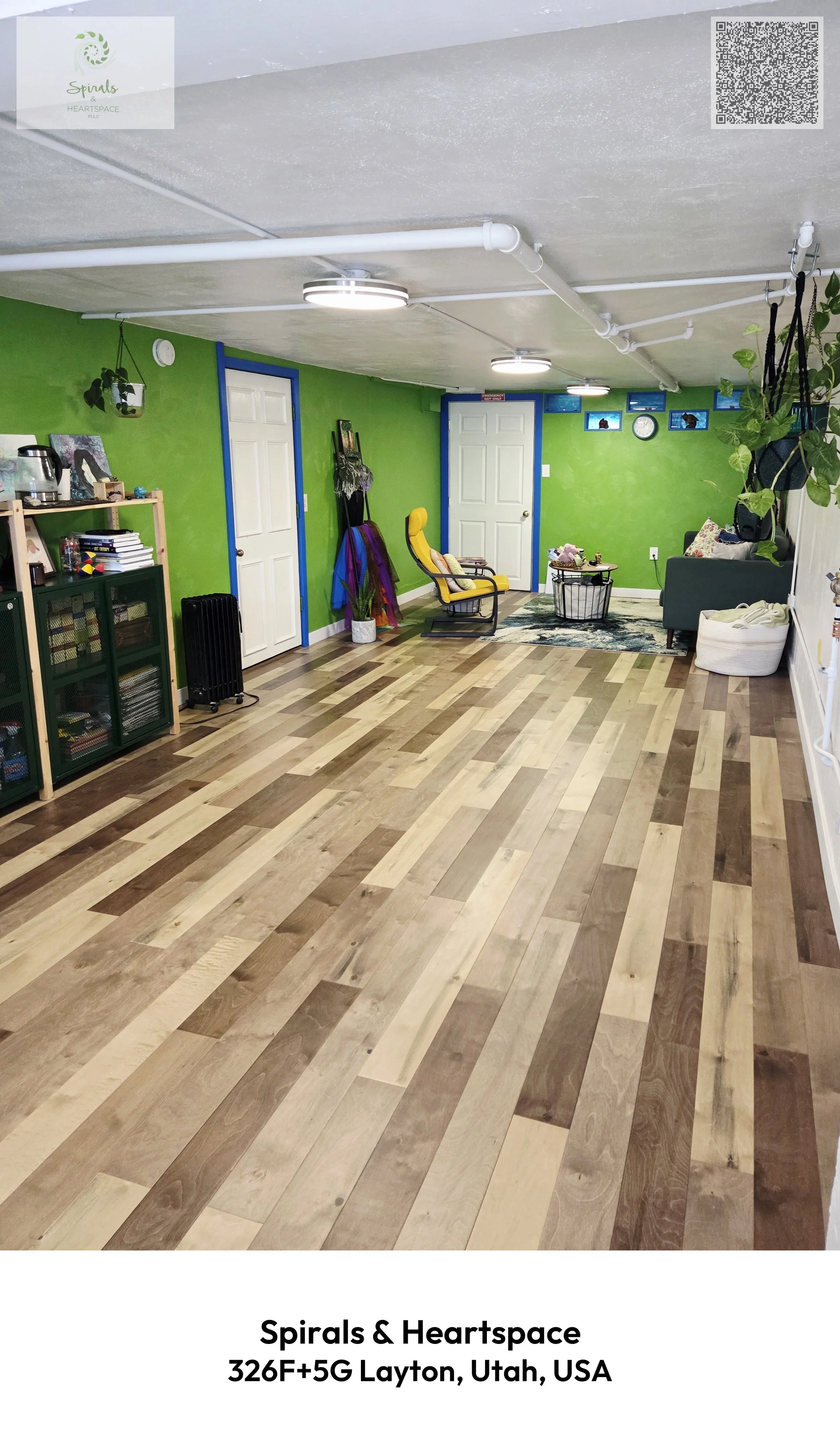
Spirals & Heartspace is a private practice in Layton, UT, led by Ande Welling, a therapist, coach, and movement facilitator with over a decade of experience. The practice specializes in deep trauma recovery, somatic therapy, and attachment healing, utilizing a unique blend of Relational Neuroscience, Expressive Arts, and Authentic Movement. Ande supports individuals, transformation seekers, and other healing professionals through a combination of traditional therapy, coaching, and consultation, all rooted in the belief that healing occurs in iterative spirals of growth.